When high inflation numbers showed up in January, for both consumers and businesses, many analysts wrote it off as a short-lived spike that would quickly resume its downward path. My own forecast was that the fight was far from over, and that has since turned out to be correct.
Price stability in America is a thing of the past. The Fed's 2% inflation target is getting harder and harder to hit. Here's why:
A 2% monthly inflation rate, presented as “healthy,” was designed as a solution that supports economic growth while still being tolerable for ordinary people.
There is absolutely no benefit to ordinary people from a currency that steadily loses 2% of its value over time. But there is a benefit for politicians, who profit from it in a thousand ways, taxes included.
Monetary “scientists” figured out decades ago that 2% inflation was high enough to keep their political masters happy, but low enough to avoid provoking public anger.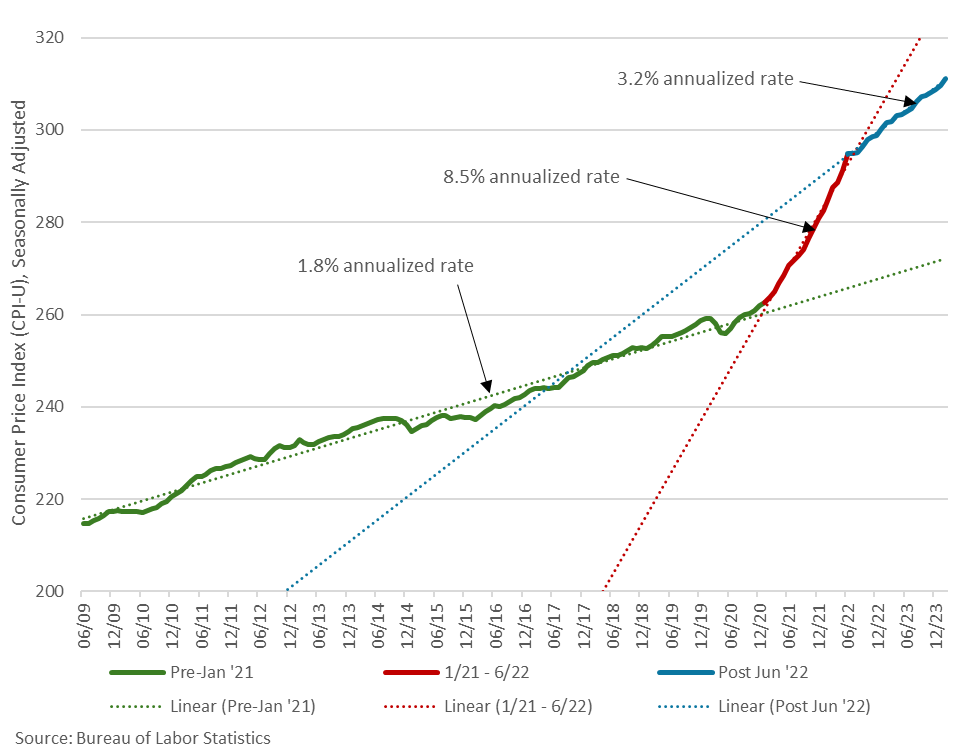
Since the last major inflation wave in the late 1970s and early 1980s, the masses have grown used to their currency devaluing gradually over time.
Think of the boiling frog: drop a frog into hot water and it will instinctively leap straight out of the pot. But put it in cold water and slowly raise the temperature, and it will eventually boil to death.
Inflation works much the same way. It took the aggressive price surge of the past three years to finally provoke public outrage.
Given that, those who keep insisting “we still haven't hit the inflation target” are technically correct, but practically wrong, because the target isn't 2% anymore.
The real target is 3%-plus, and more and more data is proving it.
After inflation peaked in June 2022, the Fed and the Treasury kept telling us it would fall back toward 2%. The first part was true, which helped mask the fact that the second part was false.
Inflation has settled quite steadily around 3.2% over the past year. In fact, that trend has been more consistent than it was during the pre-Covid economic expansion, which ran from mid-2009 to early 2020.
The Fed has used every tool at its disposal to force prices to keep rising at just over 3% a year (low interest rates, QE programs, unlimited credit lines for banks, and so on).
But why is the Fed doing this?
Because it needs to finance the Treasury's spending spree. Yellen and company are piling up new debt at an annual rate of $3 trillion. Faster inflation shrinks the real value of what the government owes, letting it keep accumulating debt while quietly eroding its worth.
As long as they keep spending at these levels, they need inflation to help pay for it.
This inflation surge shows up at every turn. Take the insurance market. Policies priced using 2019 assumptions have generated claims that far outstrip the premiums collected. As a result, insurers have turned to the reinsurance market to make up the shortfall.
As reinsurers adjusted to this new reality, they sharply raised the premiums they charge insurers, to recoup their losses, restore profitability, and rebuild the cash reserves needed to cover the next wave of insurer bailouts.
That means insurers now need to charge customers higher premiums to cover higher claims costs and higher payouts to reinsurers. The result is a sharp jump in insurance prices across the board, from cars to homes.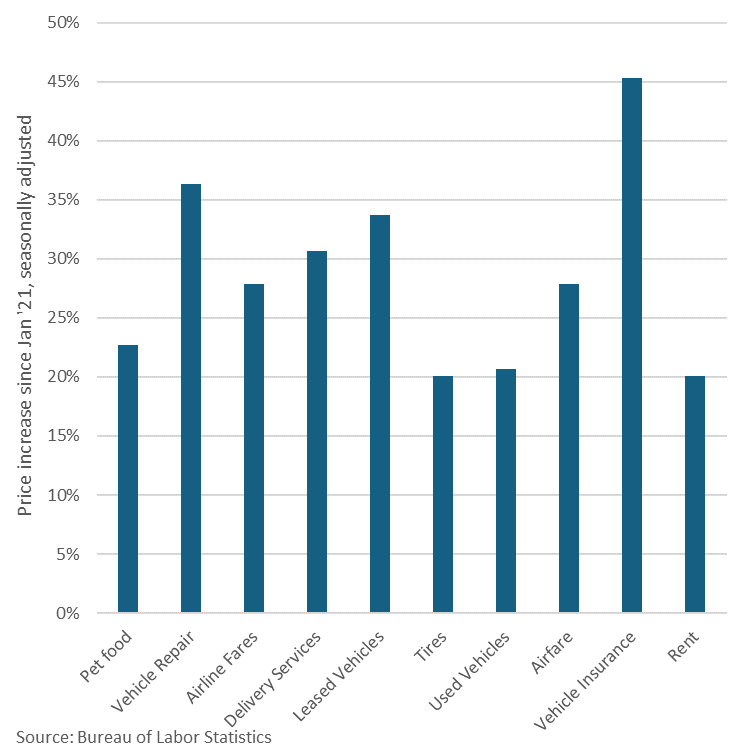
In many markets, consumer premiums have jumped 40% in just the past year! As businesses face those same rising premiums, they raise their own prices to cover the cost, meaning the increases gradually spread through the entire economy.
At the same time, worker pay is climbing, as people increasingly demand higher wages to cover the rising cost of living driven by these higher insurance premiums.
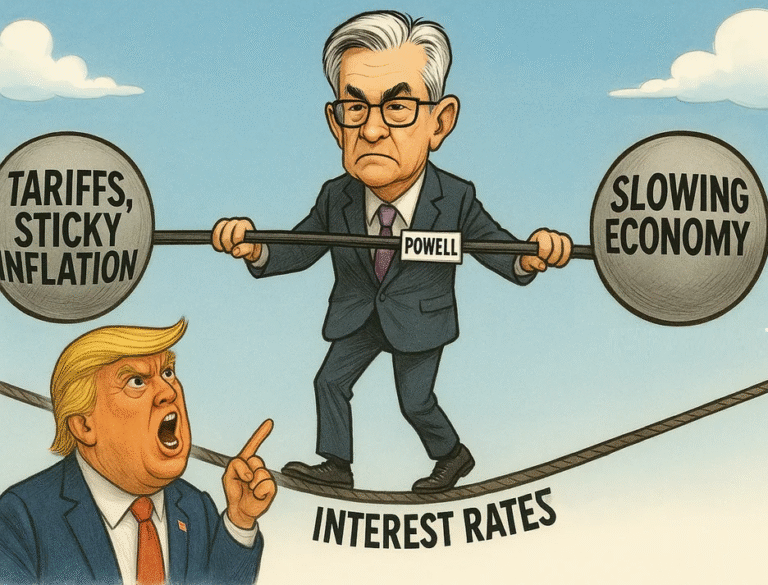
This rise in prices led Powell to claim (falsely) that insurance is the “hidden” cause of inflation. But nothing could be further from the truth. Rising prices are a consequence of the Fed's own policy, not the cause of it.
More than 50% of all the money currently in circulation was injected into the system in just the past four years, which explains the abnormal surge in prices. The Fed is losing its grip on the narrative, and it's becoming increasingly clear just how hard it is to actually hit 2% monthly inflation. And even 2% on a compounded basis is already a lot – anything above that will only stoke greater public anger. That traps us in a vicious circle, where wages have to keep pace with the rising cost of living, and those wage increases in turn fuel further inflation. (A paradox.) 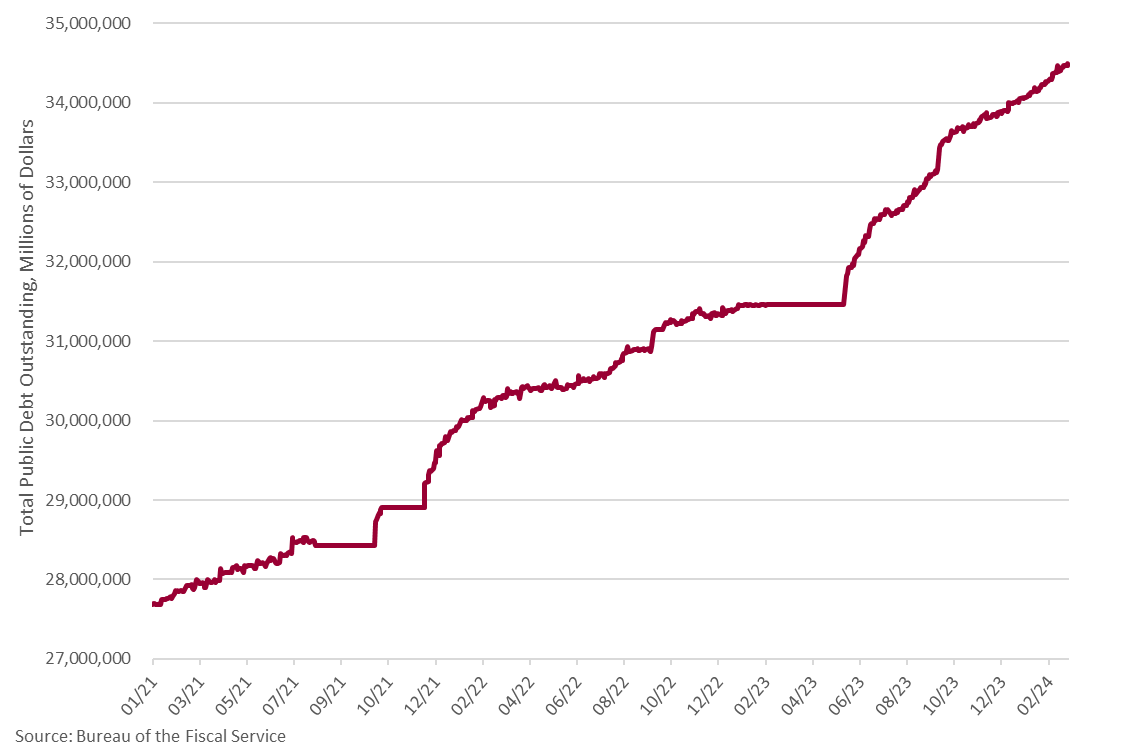
There's really only one solution, and it's both obvious and grim. The Fed would have to trigger a severe recession to squeeze spending down to a minimum, and only that would force retailers and service providers to actually cut their prices. The same holds for the housing sector. Only a genuine collapse in demand will bring about a correction in prices. As long as demand holds up, property owners have no reason to lower their prices, because at the end of the day, they don't particularly care that a family of five has nowhere to live. That was never really their concern to begin with. It should have been the concern of the Fed and the central banks, but their priorities have clearly become something else entirely, as they always have throughout history – their own profits.