2023 was marked by extraordinary volatility in financial markets, particularly when it comes to the most liquid instrument of all – gold. Various factors, such as geopolitical tensions, escalating conflicts, aggressive central bank policies, and other similar influences, triggered significant swings in the price of gold in response to any and all of these changes. This raises the question: How will the situation develop in 2024? 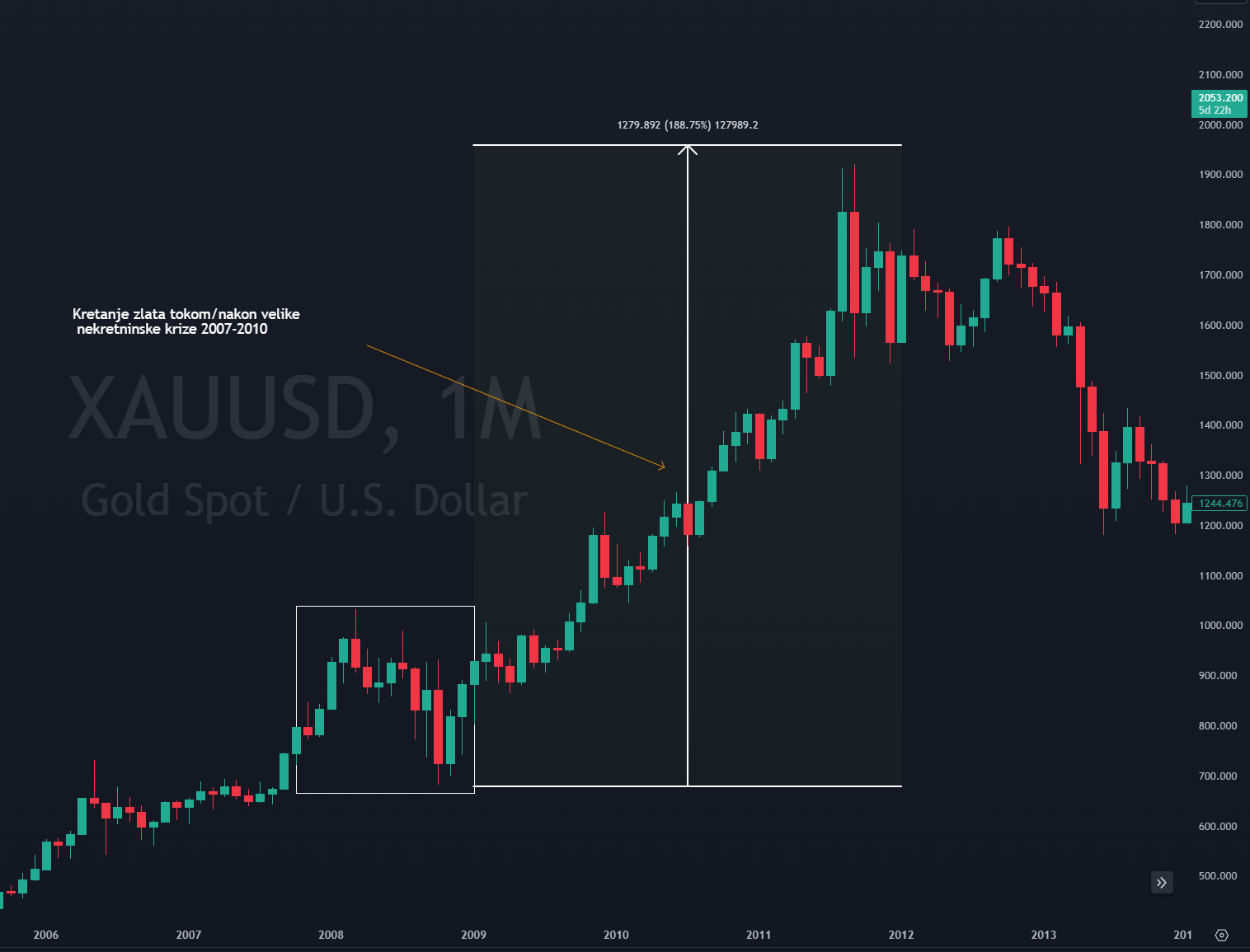
Looking at the historical trend of gold prices during periods of crisis, we can see that gold has often served as a kind of hedge, a form of protection against risk and external shocks. Investors have traditionally directed their capital toward gold as a safe haven in times of widespread uncertainty.
Focusing on the period from 2007 to 2010, we see that gold reached its all-time high (ATH) at the time and comfortably held trading above that level. The financial crisis that culminated in 2008 shook world markets significantly, and gold proved to be an exceptionally reliable safe haven amid the prevailing uncertainty. Although markets eventually recovered thanks to the Fed’s quantitative easing programs and other stimulus measures, gold prices never returned to their pre-recession levels.
Could we see a similar scenario play out again? Despite some differences between today’s situation and the period from 2007 onward, it is clear that many market sectors are facing inflated bubbles, and it’s only a matter of time before the triggers activate a chain reaction. An overheated stock market, the real estate sector, political unrest, high inflation, geopolitical tensions – all of these are factors we are carrying into 2024, and gold, true to tradition, will react strongly to any shift in these key drivers.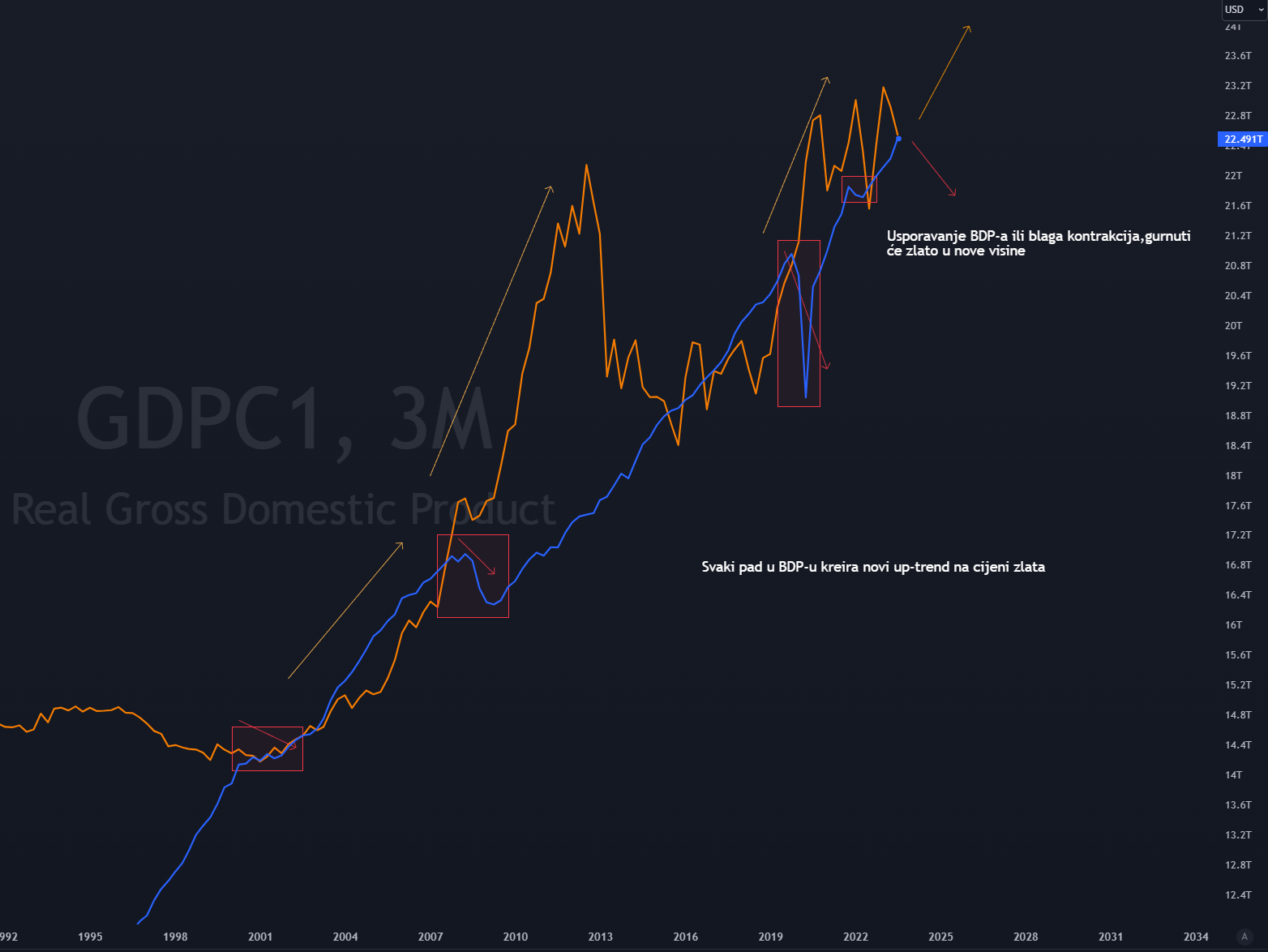
The chart above clearly shows that, throughout history, gold has almost always entered a strong uptrend once GDP began to stagnate or slow down (GDP in blue, gold in gold). Despite the Fed’s talk of a “soft landing,” it is hard to expect markets to rebalance without a more serious recession. When we talk about a recession here, we mean a technical recession that will show up as several months of GDP slowdown, followed by real economic indicators on the ground.
All things considered, what we can say with absolute certainty is that gold will definitely not be off investors’ radar in 2024. Should these drivers align and the world’s largest economies slip into recession, it is likely we will witness new highs being broken without much resistance.