
As the conflict continues to escalate in Gaza and beyond, 2024 is shaping up to bring what could be a frightening increase in global instability – and gold prices will be pulled along with it.
The conflict has spread into neighboring regions, with the potential for further regional destabilization. Israeli military operations are now targeting Hamas strongholds in the south and center, while regional tensions are intensifying through the involvement of non-state actors such as Hezbollah, Hamas, and the Houthis, all aligned with Iran. This threatens regional stability and could also put additional pressure on global supply chains if it disrupts shipping lanes in the Red Sea. In response, the price of gold remains elevated after beginning its climb in October 2023, when the conflict broke out.
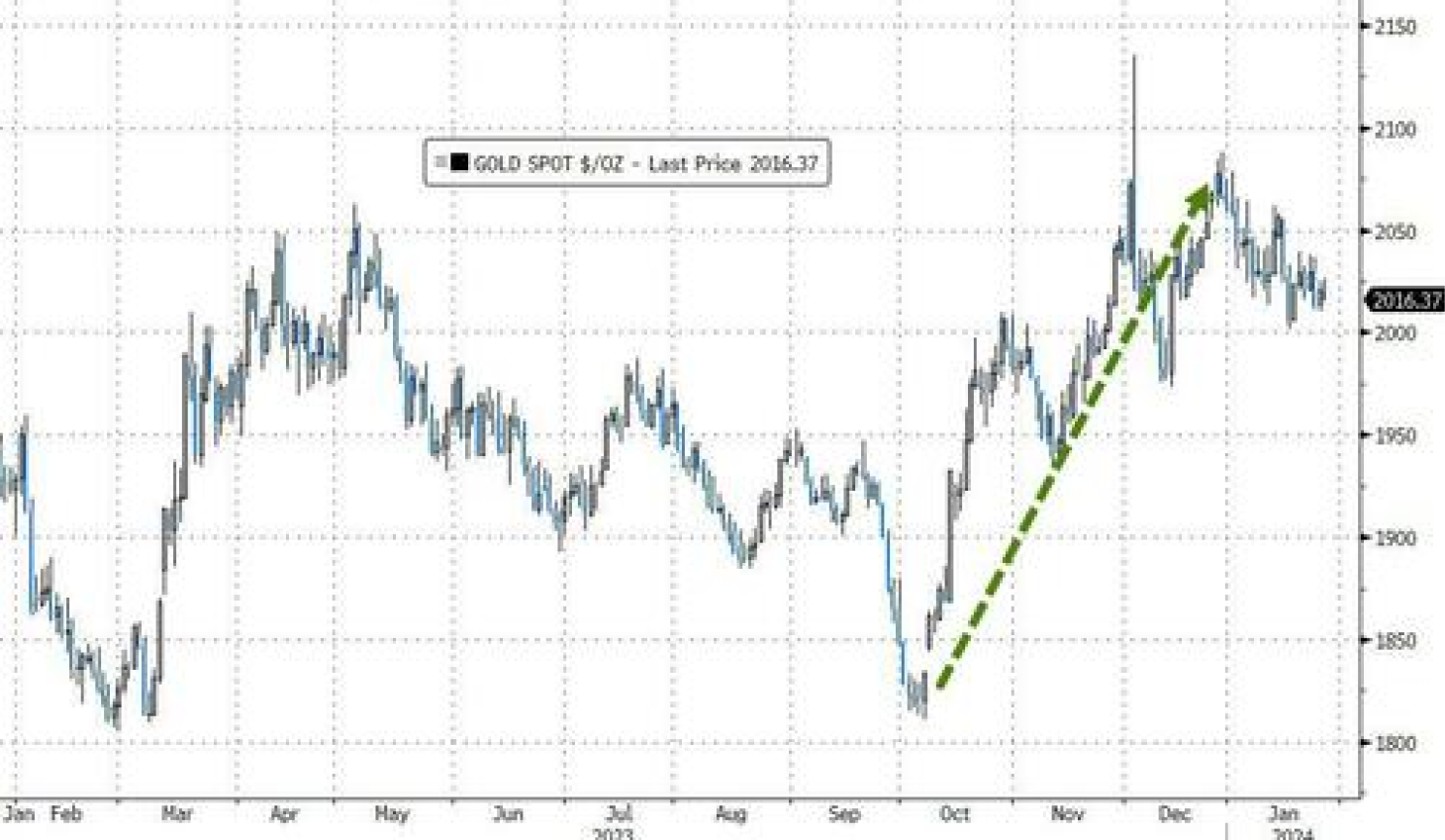
The Biden administration has vowed retaliation against the Houthis, promising a “systematic campaign” in Yemen that clearly raises the stakes of U.S. involvement in the conflict, shifting it from a proxy war toward direct engagement. Having just finished handing over billions to Ukraine amid an already widening fiscal deficit, the escalation in the Middle East carries all the hallmarks of a prolonged conflict. With no lenders willing to finance U.S. involvement, more war that the U.S. cannot afford means more money printing to fund it.
The election-year factor adds another wrinkle, with the current administration seemingly willing to embrace war in the hope of artificially boosting GDP through rising defense stocks. While catastrophic for the people in these countries and bad for the dollar, all of this meddling points to the possibility of record highs for gold in 2024 as the world sheds dollars and reduces its exposure to U.S. debt, fleeing toward monetary safety.
Record domestic oil production in 2024 may help provide a small temporary buffer between Americans and higher fuel prices caused by the war and last year’s OPEC supply cuts. Combined with other non-OPEC countries like Brazil and Guyana pumping record volumes, pressure is mounting on OPEC to reclaim some of that market share, which could further push down oil prices in the short term.
However, the current peak in domestic oil production will not solve the growing bubble of U.S. debt and is not enough on its own to keep gold prices low. This was evident even before the conflict began, and it is even more evident now as the conflict appears firmly on a path of escalation and destruction of an already unstable region. Any relief in oil prices is likely to be temporary, especially as demand rises and the money printing used to finance the war puts additional pressure on the dollar.
While the USD remains the “best of the worst” compared to alternatives like the euro, foreign countries such as China had already been offloading U.S. Treasuries before the war, and trillions will soon need to be refinanced. That is just one more grain of sand in the global pile of debt that was already threatening trouble before the war broke out, making a bad situation even worse:
In short, the U.S. Treasury is caught in a debt trap that could result in foreigners dumping U.S. Treasuries and the dollar itself.
In fact, Chinese holdings of Treasuries were reduced by as much as 40% last year in order to support the yuan, marking just one factor in the growing trend of global de-dollarization that threatens the dollar’s status as the world’s reserve currency. And while some Chinese sovereign holdings have been swapped for mortgage-backed securities, these could also run into trouble if the U.S. real estate market falters following a turbulent year for housing.
The logical outcome of more war, more global instability, oil shortages, and election-year madness? A financial crisis and an accompanying global gold rush as the dollar is increasingly cast aside, and countless desperate investors and central banks turn to protect their wealth with history’s favorite metal – gold.