This subject always lurks somewhere in the background, but at a moment like this — when the global financial system is going through a crisis that will soon call for mass money printing — it's time to bring it to the front.
Many people have spent a great deal of time trying to uncover the true identity behind the pseudonym Satoshi Nakamoto.
But it's clear that Satoshi never wanted a million Bitcoin for himself — what he wanted was to secure consistent network strength so Bitcoin could attract the participants it needed.
Fortunately, Satoshi sowed enough doubt about his identity to make himself impossible to find.
The crypto world could have had a leader, someone whose words journalists and the public would treat as authoritative, but who would run counter to the core principles of Bitcoin's decentralized consensus. Someone whose politics, affiliations, and past could have been used against Bitcoin, to undermine and diminish its value. I think Satoshi was smart enough to understand this, which is why he chose to hide his identity behind the pseudonym Satoshi Nakamoto.
What's more, I think every choice he made in constructing this pseudonym was aimed at obscuring and confusing. Satoshi writes in British spelling and slang, worked on Bitcoin during American business hours, and picked a Japanese name.
He knew exactly what he was doing — he fought to keep his identity unknown, not for his own benefit, but for the benefit of the crypto world. He wanted Bitcoin to succeed, because he knew it could meaningfully benefit every person on Earth (with the possible exception of the current political and financial elite), and he knew Bitcoin had to be leaderless to achieve that.
The motive
To understand why Bitcoin was created, we need to understand the context of that time and the history that led up to that moment.
Bitcoin launched on January 9, 2009. In the very first Bitcoin block, Satoshi deliberately embedded a newspaper headline from that week: "Chancellor on brink of second bailout for banks."
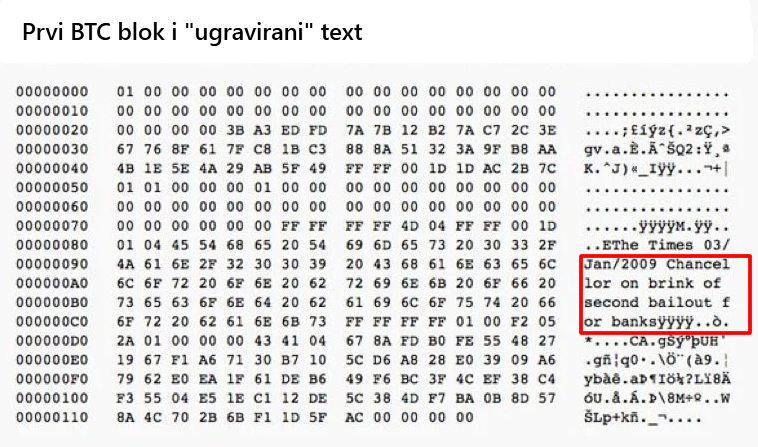
That was the Great Financial Crisis, the biggest market crisis in generations. And the response offered by politicians and experts? Bank bailouts. Certain banks were deemed "too big to fail" and therefore had to be rescued, by printing money and handing it to those banks.
On the surface, all of that looks reasonable. But in reality, it meant that certain mega-corporations received protection from a select group of powerful people, shielding them from the consequences of their own business decisions. The playing field was no longer level.
What's more, money is never simply printed out of thin air. Instead, what happens is a redistribution of the purchasing power of the money that already exists. If there are $1,000 in the world and you print another $100, you're spreading the current purchasing power of that $1,000 across $1,100. The original $1,000 now has the same purchasing power that $910 once had. In essence, printing that extra $100 comes directly at the expense of your money — costing it 9% of its purchasing power!
So purchasing power is quietly taken from ordinary people.
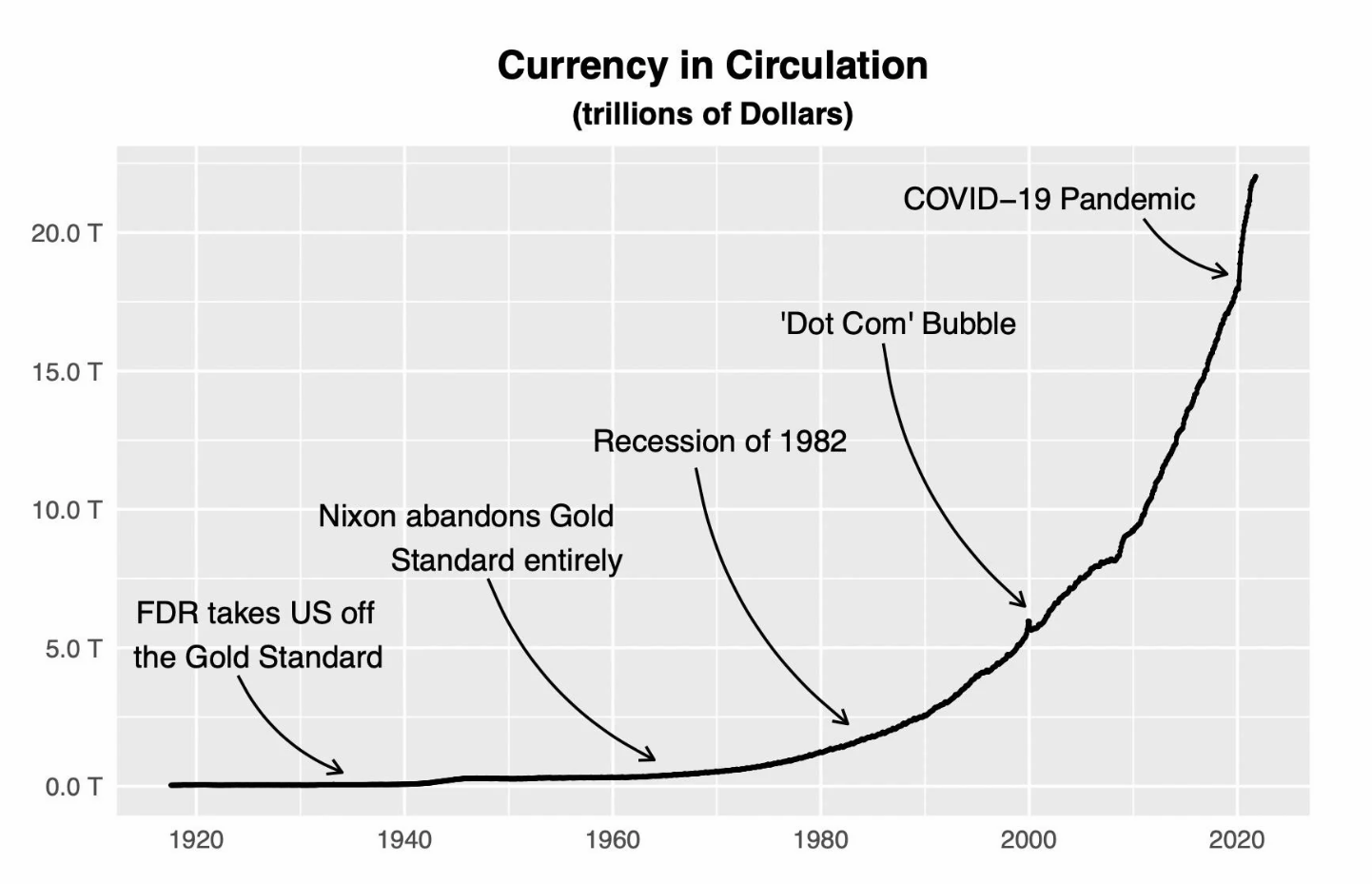
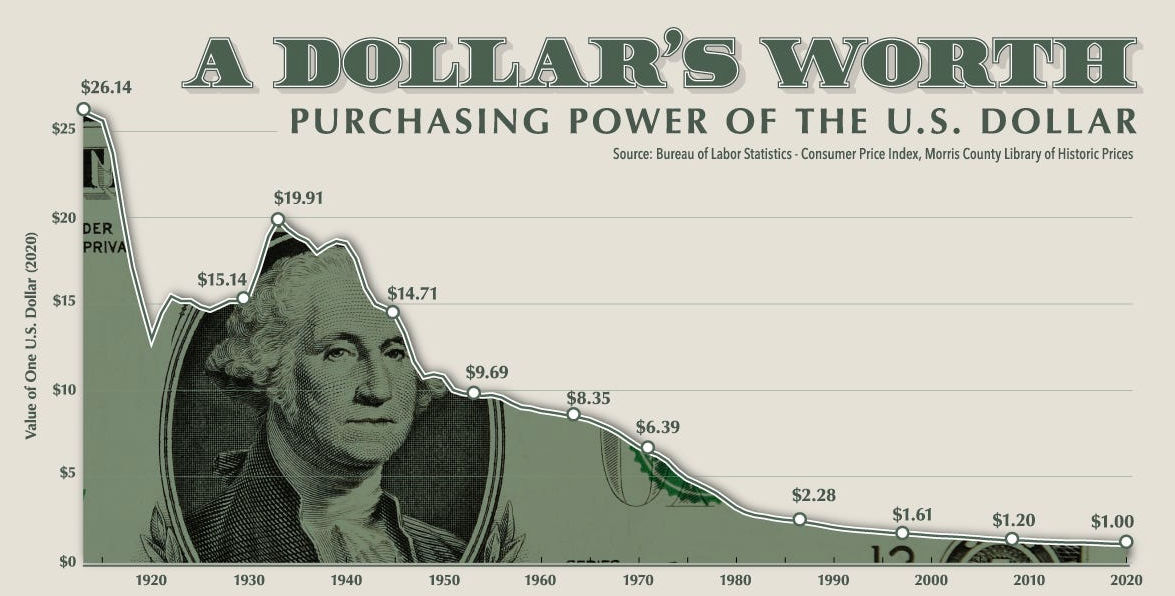
While the Occupy Wall Street movement was an angry reaction to the injustice and indirect theft that came out of the bank bailouts, Satoshi must have foreseen what was coming. Bitcoin may have launched a few months after the Great Financial Crisis began, but Satoshi (whoever that is) had undoubtedly been working on this solution for years before that. His approach wasn't a protest demanding change, transparency, and fairness. Instead, Satoshi built a system designed to deliver change, transparency, and fairness by creating superior financial incentives for ordinary savers, compared to the existing system.
The goal
Through Bitcoin, Satoshi wanted to end the injustice of selective bank bailouts by making any bailout, ever, impossible. Instead of a false capitalism, he built a radical system of relentless capitalism. Yes, it's harsh, but the only way to prevent the abuse of preferential power is to make sure no one holds that kind of power — including Satoshi himself.
Instead of a system that favors those close to the policymakers who control the flow of money (so-called Cantillonaires, named after the 18th-century economist Richard Cantillon, who first described this phenomenon), Satoshi built a system where the flow of money is predefined, limited, and distributed through an objectively fair global competition.
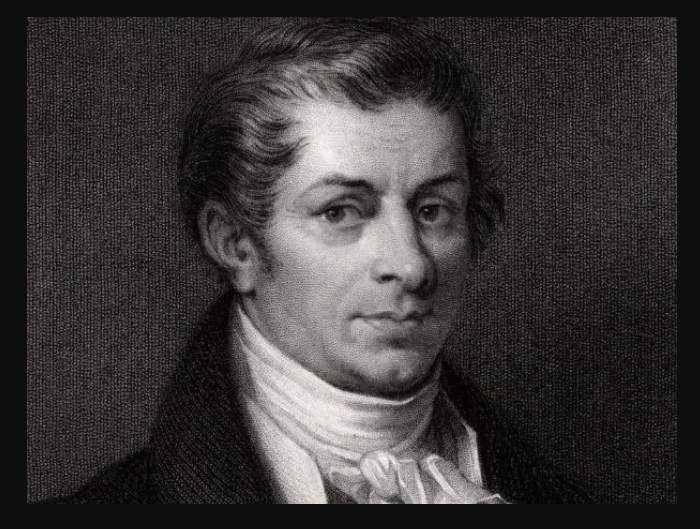
Richard Cantillon
Instead of a system that rewards those who have access to an unfair share of newly printed money, Satoshi built a system that rewards those who simply hold onto their money over time. It genuinely rewards savers! A truly revolutionary idea (and, at the same time, a bit of an embarrassment that it took humanity this long to arrive at it).
This represents a new paradigm — one where deflation takes the lead, in contrast to the inflationary race for survival we've been sold as being in our best interest (by those who profit the most from inflationary money printing). A new system where money that is saved and stored securely actually grows in purchasing power over time (thanks to the extraordinary properties of its increasing scarcity).
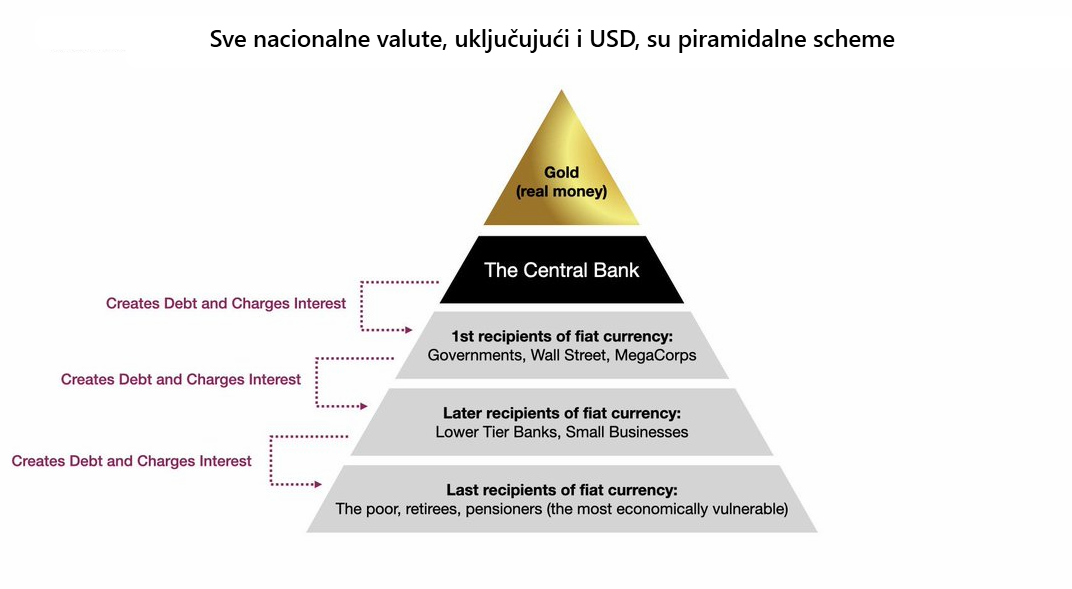
Money, not for bankers and political insiders, but for everyday workers. That's what Satoshi wanted for the world. And that's why he created Bitcoin.
Conclusion:
The question of who Satoshi is may one day get its answer. What we can hope for is that he really is someone who designed a system that favors the little guy. But there's also another side to this, in which Satoshi is actually the banking system itself, having introduced crypto money to prepare future generations for a digital transition and the creation of central-bank-controlled crypto currencies. In that case, the banks would once again emerge as the winners and, unfortunately, prove once more that they're a step ahead of everyone else.
Whatever the theories and speculation, those who truly understand Bitcoin don't measure its value through the lens of today's currencies. Its real strength lies in its independence, resilience, and its ability to redefine the financial system — beyond the reach of inflation, manipulation, and centralized control.