There are plenty of different theories about why some people become exceptionally successful traders while others spend years stuck in the same cycle of short profitable stretches followed by big losses.
Years of mentoring have given me insight into the main problems most people run into, and let me recognize the behavioral patterns of successful and unsuccessful traders. I'm writing this for YOU, the person who wants to take trading in the financial markets seriously. Take your time and read this article carefully.
The biggest difference between amateurs and professionals isn't the strategy
Beginners often believe that professionals have access to some hidden method. That belief sends them into an endless search for new indicators, approaches, and strategies, with every new method initially feeling like the final answer.
The problem is that no system can eliminate losses. Even a strategy with a clear statistical edge goes through periods of stagnation or poor results. Professionals accept this: they don't expect perfection from a strategy, but consistency from themselves. Their job is to recognize an opportunity, properly assess the risk, and execute the plan with discipline.
An amateur trader, on the other hand, treats every position as a final verdict on their own ability. When they win, they think they've cracked the market and feel on top of the world; when they lose, they conclude the strategy no longer works, and the loss hurts on a personal level. This mindset creates a vicious cycle — the trader keeps changing their approach based on far too small a sample and never develops real trust in their own process. Professional-level trading begins with understanding that the quality of an approach is measured over a long-term process.
A professional doesn't measure trading quality solely by profit
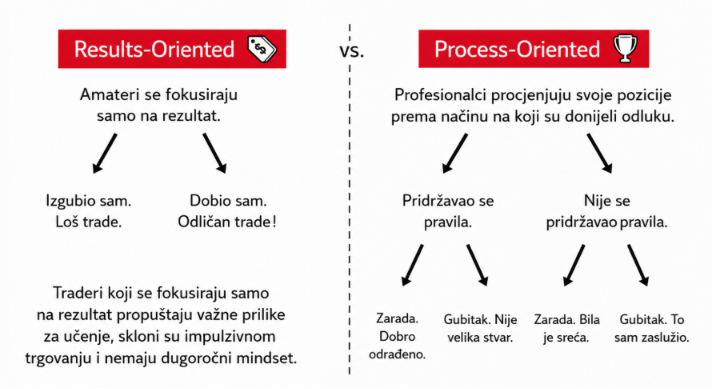
Over the years I've noticed that most people who get into trading focus exclusively on making money. While profit is the main driver, it isn't always a reliable measure of the quality of an individual decision.
In the market, it's entirely possible to make a good decision and still lose money. Just as it's possible to open a bad, unplanned, or emotional position and end up in profit. The outcome of a single position, therefore, doesn't necessarily show whether the decision itself was good or bad.
You can study monetary policy, inflation trends, yield movements, market positioning, and technical structure in detail, then open a position with clearly defined risk. If an unexpected geopolitical headline or an official's statement then completely shifts market sentiment, the position can still end in a loss despite a well-executed process.
Such a loss doesn't automatically mean the analysis was wrong. It can simply mean that a lower-probability scenario played out — one that was still possible.
At the same time, another trader might ignore their plan, open an oversized position, disregard risk, and happen to catch a strong move in the right direction. Even though they made a profit, that decision isn't sustainable in the long run. If they keep repeating it, that same behavior will sooner or later lead to a serious loss.
A professional therefore doesn't just ask how much they made, but how they got there. Was the analysis sound? Was the position in line with the plan? Was the risk acceptable? Was the decision made rationally or emotionally? Did the trader react to an actual change in information, or to short-term fear?
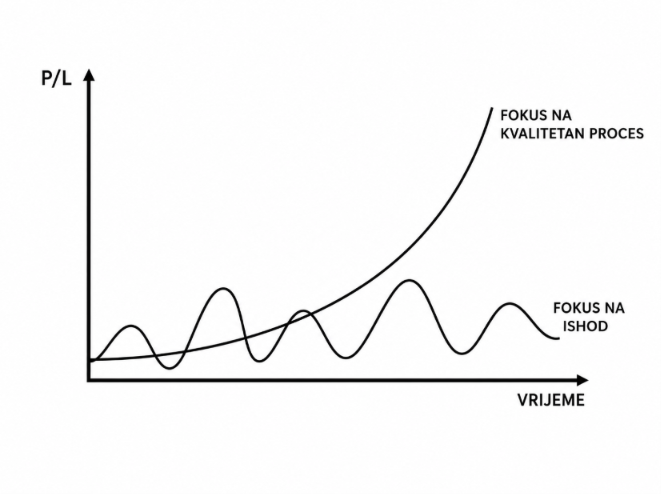
A single result can be random, but quality of process is not. Over the long run, it's precisely the quality of the process that turns into the quality of the results.
A professional doesn't control the market, only their own process
The key moment in a trader's development comes when they accept that they cannot control the outcome of any single position.
A trader can control preparation, analysis, the amount of capital at risk, and the conditions for entry and exit. What they cannot control is the reaction of millions of other participants, sudden political decisions, or unexpected data.
An amateur fights that fact — they experience an unexpected move as a personal defeat, shift their stop-loss, or enter revenge trades. A professional accepts uncertainty as part of the job. Their goal isn't to be right in every situation, but to react correctly when they're wrong.
What I've noticed in almost everyone who is not a successful trader is that losses hurt them on a personal level. They then emotionally open the next position, then the next — and so on until the whole account is gone. Separating the outcome of a position from your emotions is an essential part of your path toward professional trading.
Professionals aren't without emotions. The difference is that emotions don't run their decisions.

.
Professionals use a broad range of analysis
One of the main problems most beginners have is focusing only on technical analysis.
The reason is that technical analysis looks simple and can easily be sold to beginners as the holy grail. "Master just THIS one thing and you'll be profitable" or "The magic line that puts thousands on the table."
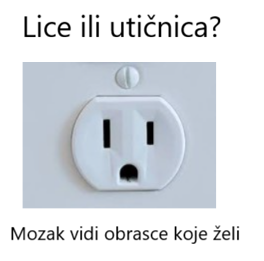
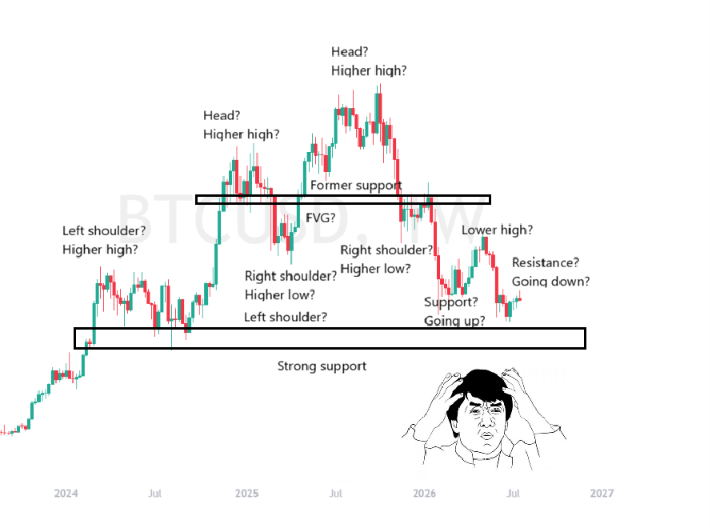
Beginners look for a specific pattern, a technical level, or an indicator signal that's supposed to tell them when to buy or sell. But our mind is deceptive and can easily spot patterns where none exist, simply because we want to see them.
Technical analysis can certainly be very useful. It helps identify market structure, pinpoint potential entry levels, define risk, and assess where the key points of interest lie. However, a chart is, above all, a consequence of decisions market participants have already made.
Fundamental analysis tries to understand the cause behind those decisions.
Currencies, bonds, stocks, and commodities do not move over the long run just because price broke a certain line or formed a certain pattern. Behind larger, more sustained moves you'll usually find changes in interest rates, monetary policy expectations, inflation, economic growth, fiscal policy, geopolitical risk, or global capital flows.
A trader who understands the fundamental backdrop of the market doesn't just react to a price move — they try to assess whether that move has real economic grounding. This gives them broader context and makes it easier to tell fleeting volatility apart from the start of a more significant trend.
Patterns on their own mean nothing. The brain sees what it wants to see. Once a move has already played out, it's easy to find a pattern that justifies why it had to go up or down.
A professional doesn't try to predict the future
Beginners believe a good trader has to know exactly what comes next. That's not true. A professional approach isn't built on predicting a certain future, but on defining the conditions under which an idea holds — and the conditions under which it no longer does.
A meteorologist analyzes numerous parameters to estimate the probability of weather conditions. If they forecast sun and it rains, that doesn't mean the meteorologist is bad — it just means it's a weather forecast, not a prophecy. How many times has tomorrow's forecast called for rain, only for tomorrow to arrive without a single cloud in the sky?
The same holds for trading: analysis serves to increase probability, not to instill false certainty. If new data contradicts the thesis, a professional adapts. The most dangerous trader isn't the one who gets it wrong, but the one who refuses to admit that circumstances have changed.

If the data confirms the original thesis, conviction can be maintained or increased. If it contradicts it, one has to be ready to adapt. That's not weakness or inconsistency — it's an integral part of rational decision-making in an environment where information is constantly changing.
A professional accepts losses
Every approach goes through periods of weaker results due to shifts in the market regime or ordinary statistical distribution. If a trader changes their rules after a few losses, they'll never gather a large enough sample for an objective assessment. At that point, they're no longer trading a system — they're trading their own frustration.
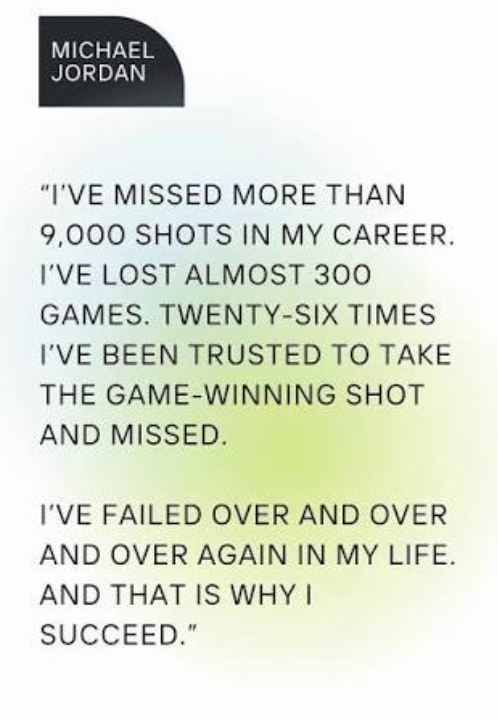
There's a story about Michael Jordan and his view on missed shots. Even though he's remembered as one of the greatest ever, he had thousands of missed shots and lost games. Misses are part of the process, not necessarily a sign of a bad player. Why would trading be any different?
A professional trader knows when not to trade
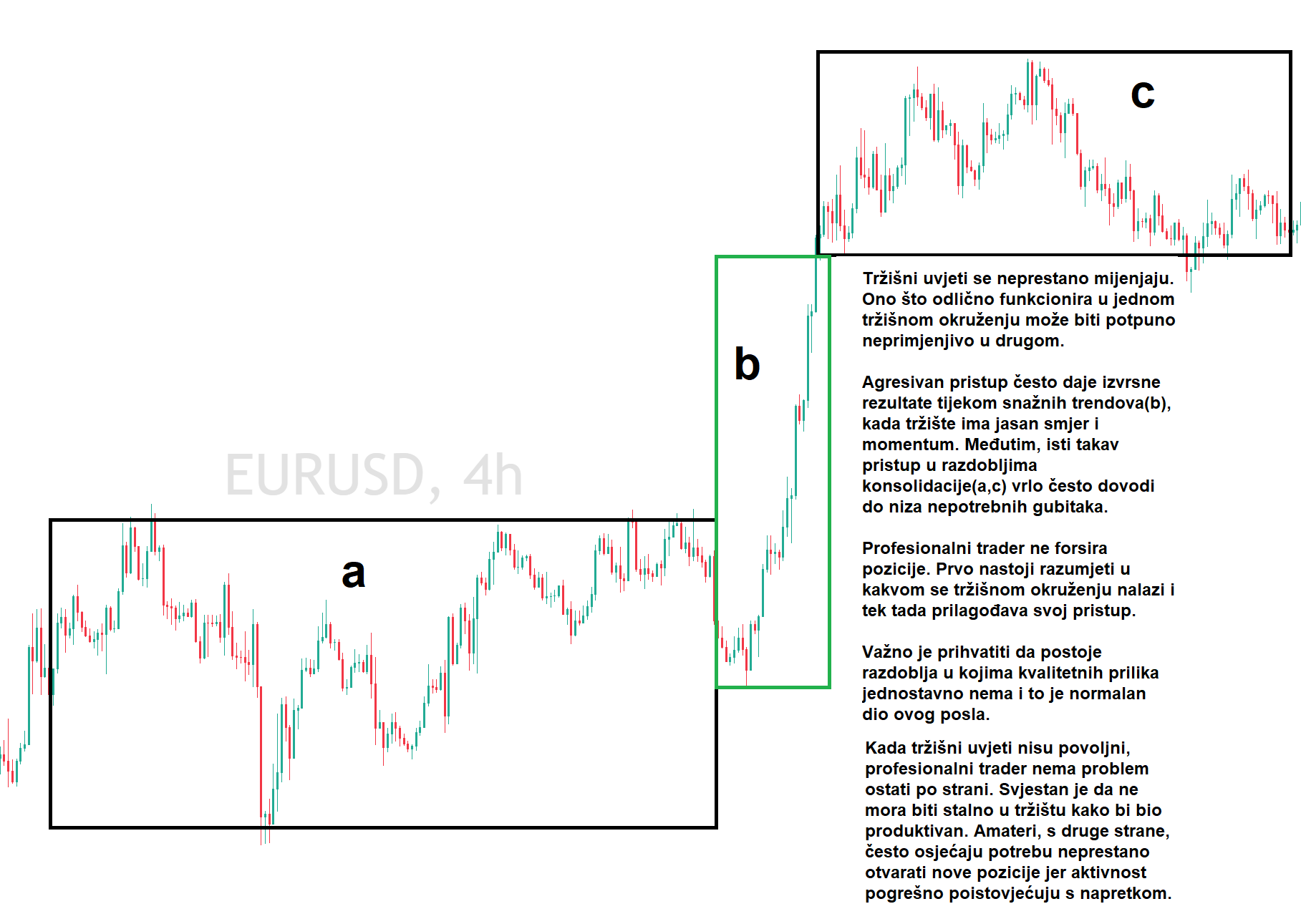
One of the least appreciated skills in trading is the ability to stay out of the market. Something I've noticed in almost every beginner is that they lack the strength, will, or desire to be out of the market. They equate success in trading with constant activity.
Nothing could be further from the truth.
A beginner often believes they must always have a position open in order to seize opportunities. A professional understands that the absence of a good opportunity isn't the problem. The problem is forcing a position when there's no clear edge.
If the fundamental signals contradict each other, if the market has no clear catalyst, or if the potential risk outweighs the expected reward, the best decision may be to do nothing.
This is especially important during periods when the market narrative is shifting quickly, when participants are sharply divided, or when price isn't reacting logically to new information. Under such conditions, forcing a position is often driven by boredom or a need to stay active, rather than by a genuine opportunity.
A professional doesn't measure productivity by the number of positions taken, but by the quality of the selections made. Sometimes the very absence of trading is the best proof of discipline.
How to develop (and keep) a professional mindset
The shift from an amateur to a professional mindset doesn't happen overnight. It requires a change in how a trader observes the market, evaluates their own results, and makes decisions.
If you remember only a few things from this whole article, let them be these:
1. Stop searching for the perfect strategy and start building a consistent process.
What sets professionals apart isn't that they never make mistakes, but that they make good decisions day after day, regardless of the outcome of any single position.
2. Judge the quality of your decisions, not just the results they produced.
A good analysis can still end in a loss, just as a bad decision can end in profit. Over the long run, the market rewards quality process, not randomness.
3. Accept that you cannot control the market.
You can control your preparation, risk management, discipline, and how you react when you're wrong. Professional trading is built on exactly that.
4. Understand what drives the market before you look for an entry on the chart.
Technical analysis shows where price is moving, but fundamental analysis explains why it's moving. A professional trader always tries to understand the cause, not just the effect.
5. Don't feel the need to be in the market at all times.
One of the most valuable skills in trading is the ability to wait. A professional doesn't open positions out of boredom or because they feel they're missing out. They trade only when they judge that they have a real edge.
And finally, consider this
One thing I wish every beginner understood before putting their first euro into the market is that success in trading almost never comes quickly — it's the result of a string of correct decisions made day after day.
Through years of mentoring, I've met many people who, in their first few months, expected results that in reality take years to build. Some concluded after three or six months that they simply "aren't cut out for trading." Others gave up after a few big losses, or because they felt everyone around them was progressing faster.
I almost always ask the same question.
How much time would you be willing to invest to become a top doctor, pilot, or engineer?
The answer is always the same.
Years.
But when it comes to trading, many expect a few months to be enough to consistently beat one of the most competitive markets in the world.
That's not realistic.
A professional trader isn't just building capital. They're building a mindset, discipline, a routine, and the ability to make good decisions under pressure. That takes time.
The market doesn't reward those who rush — quite the opposite. It punishes them severely.
Because of that, never measure your progress against where someone else stands. There's no shared timeline in the market. There's no age by which you "must" be profitable, and no deadline by which you "must" succeed.
There's only one question that matters.
Did you become a better, more capable person/trader today than you were yesterday?
If you did, you're moving in the right direction — even if you can't yet see it in your trading account.
The biggest mistake isn't losing a few positions. The biggest mistake isn't even losing a whole year.
The biggest mistake would be quitting at the very moment you finally started building the habits you'd been missing for years.
Because from everything I've seen through mentoring, successful traders aren't necessarily the ones who progress the fastest — they're the ones who stay in the game long enough for their knowledge, experience, and discipline to finally start working in their favor.